
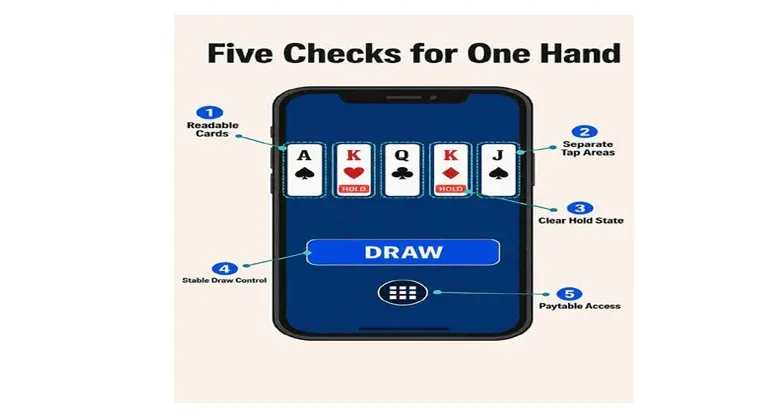
Video poker on your phone should feel as natural as chatting with your crew. You see five cards, you pick your keepers, you hit draw, and you pray to the gaming gods. But here's the thing, fam: if the screen isn't built right, you're fighting the interface instead of playing the game. That's not how we roll. Africa is leading the mobile-first charge, and our games need to match our energy.
What Makes a Phone Screen Work for Video Poker?
The core challenge is simple. You need to read five cards clearly, tap the ones you want to hold, and hit that draw button without second-guessing yourself. When developers just shrink a desktop layout, they create a mess. Cards become hard to read, tap areas get missed, and you can't tell which cards you've selected. A proper mobile screen keeps the flow obvious: see the cards, mark your holds, confirm the draw, and watch the result. No confusion, no stress.
The visible card and the area that responds to your tap don't have to be the same size. According to a 2026 Siteimprove analysis, standard guidance suggests 44 by 44 points for Apple devices and 48 by 48 density-independent pixels for Android. These are starting points, not rules set in stone. A smaller card can sit inside a larger invisible tap zone. But here's the catch: five cards in a row still need enough space between them. If they're too tight, you'll accidentally hold the wrong card. That's a rookie mistake nobody needs.
How Do You Know Which Cards Are Held?
When the deal lands, all five cards should look identical. Neutral. No borders, no movement, no labels. Once you tap a card, it needs a permanent marker that says