
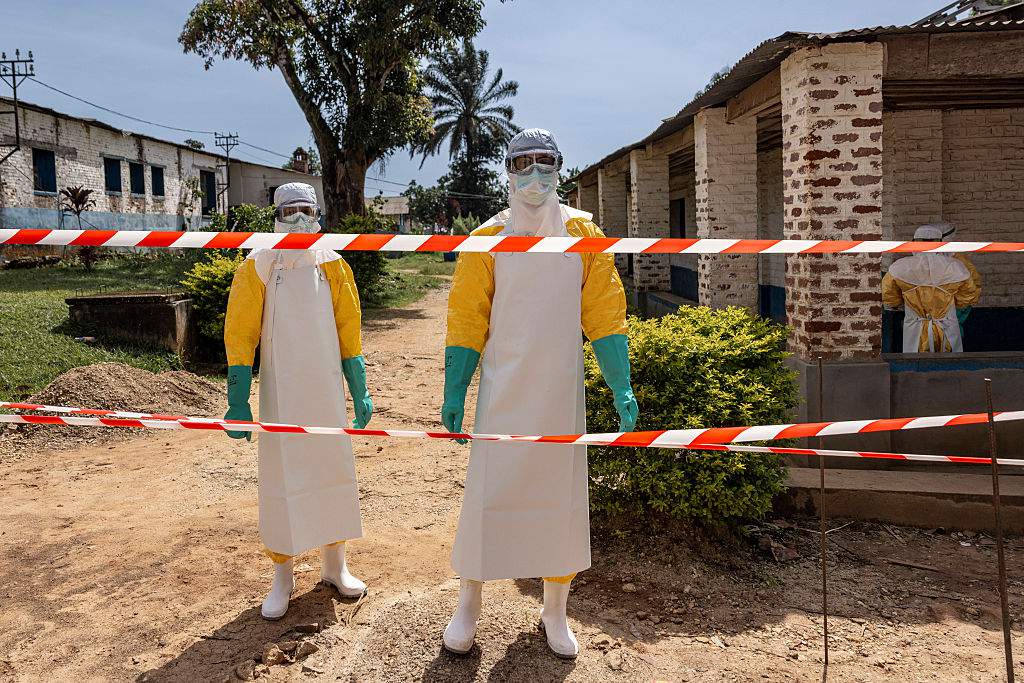
The numbers are stark and the clock is ticking. Over 900 suspected cases and 220 suspected deaths later, the Ebola outbreak in the Democratic Republic of Congo has officially crossed into Uganda, and the World Health Organisation is openly admitting it cannot keep pace with the virus.
WHO Director-General Tedros Adhanom Ghebreyesus didn't mince words this Monday.
We are urgently scaling up operations, but at the moment the epidemic is outpacing us.He urged countries bordering the DRC to act immediately. But here is the real gist: when international bodies scramble to catch up, it reminds us why Africa cannot afford to wait for external saviours. Our health security must be built by us, for us.
The Bundibugyo Strain: No Vaccine, No Treatment
This outbreak is driven by the rare Bundibugyo strain of Ebola, and here is the painful truth: there is currently no approved vaccine or treatment for it. The WHO has declared the outbreak a public health emergency of international concern, and fear is running high on the streets of cities across the DRC and Uganda.
Uganda has now confirmed seven cases in total, with two new infections detected on Monday. Both are health workers at a private facility in Kampala. These are our frontline soldiers, fighting a virus the world has no cure for yet. They deserve more than applause. They deserve fully funded, African-led health infrastructure.
Communities Push Back Against Burial Restrictions
In Mongbwalu, Ituri province, tensions boiled over on Sunday evening. Angry young men stormed the General Referral Hospital, demanding the bodies of their relatives. Gunfire rang out as medical staff scrambled to evacuate patients. Hospital director Richard Lokudu confirmed the chaos, though the full extent of injuries remains unclear.
Just a day earlier, residents set fire to an MSF treatment tent in the same area. Eighteen suspected Ebola patients fled the facility and remain unaccounted for. Last Thursday, a treatment centre in Rwampara was also torched after families were barred from retrieving a body.
Let's be real about what is happening here. Congolese authorities have restricted traditional burial practices to curb transmission, banning funeral wakes and gatherings of over 50 people in the northeast. But when communities feel sidelined in decisions about their own dead, friction was always going to follow. This isn't ignorance. It is a deep cultural disconnect between top-down emergency protocols and the people they are meant to protect.
The Pan-African Response We Need
The epicentre of this outbreak is in Ituri province, but the virus has already reached 200km beyond ground zero and jumped national borders. Ebola spreads through direct contact with bodily fluids, causing severe bleeding and organ failure. It does not respect borders, and it does not wait for WHO briefings.
Africa has the talent, the scientists, and the resilience to respond to this. What we need now is the political will to fund our own health systems, develop our own vaccines, and lead our own emergency responses. The DRC and Uganda are on the frontline today, but tomorrow it could be anywhere on the continent. Pan-African solidarity isn't just a slogan. It is a survival strategy.
The time for waiting on the world to notice African crises is over. We notice. We act. We protect our own.