
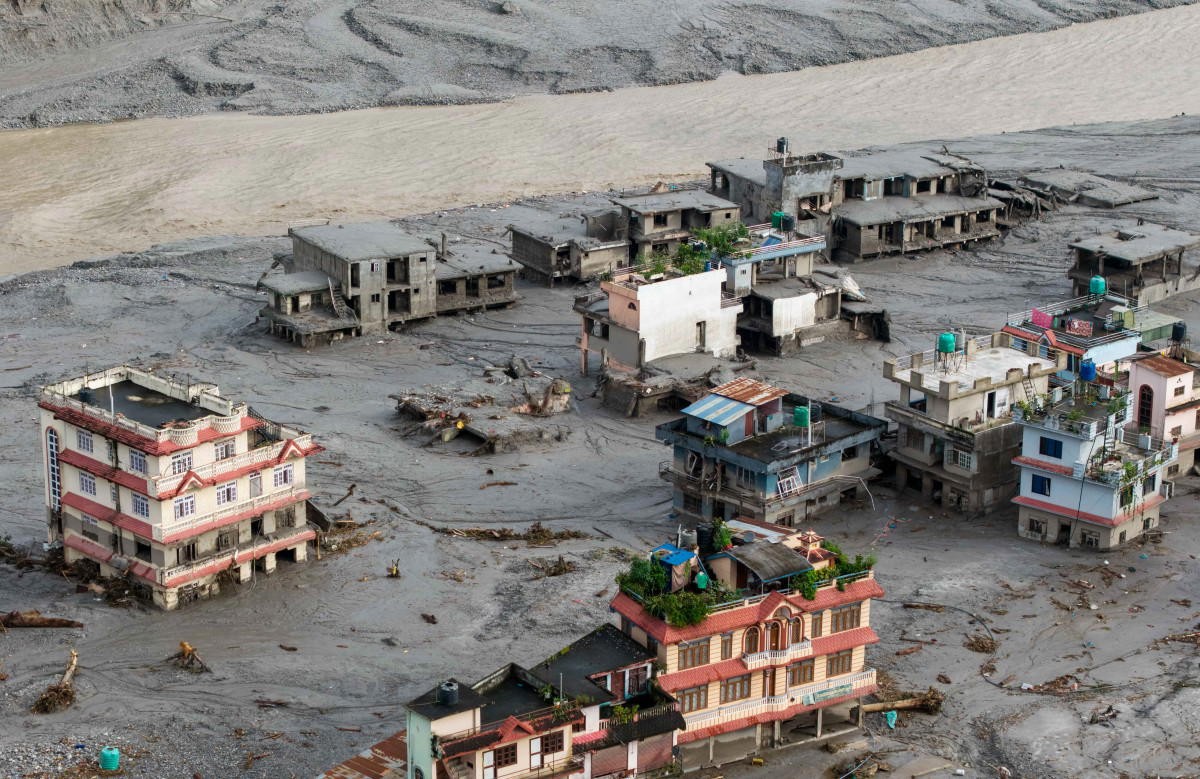
At least 180 people have been confirmed dead and over 1,300 remain missing after catastrophic flash floods and landslides tore through the Nepal-Tibet border region on Wednesday. The disaster, triggered by a glacial collapse, swept away entire villages and caught hundreds of foreign tourists, including pilgrims, in its deadly path.
Rescue teams are racing against time Thursday, digging through mud and debris for survivors. The US Geological Survey confirmed the flood was sparked by a glacial collapse that unleashed a massive flow of icy debris, creating what experts are calling an 'inland tsunami' that travelled nearly 170 kilometres south into Nepal.
What caused the Nepal-Tibet flash floods?
The US Geological Survey initially reported the event as a magnitude 4.4 earthquake. However, after analysing seismic recordings, scientists determined it was actually a 'glacial collapse and debris flow'. Climate change is accelerating glacier melt worldwide, dramatically increasing the risks of such catastrophic events across the Himalayan region.
How many people are missing and who are they?
Nepali police have recovered 177 bodies, with 823 people still out of contact in Nepal alone. Among them are 517 foreign tourists from India, Australia, Britain, Malaysia, the Netherlands, Portugal, South Africa, South Korea, and the United States. In China's Tibet region, state media reports three deaths and 558 people missing, including 260 foreigners.
Many of the missing are Hindu pilgrims who were returning from a holy pilgrimage to Tibet's snowcapped Mount Kailash. Indian spiritual leader Sadhguru, visibly shaken, confirmed the devastating loss in a video message: 'Literally, the entire group was there in the building. This is a terrible and extraordinary event.'
Which areas were worst affected?
Rasuwa district in northern Nepal was the first hit, but deaths have been reported across seven Nepali districts as floodwaters raged south to Chitwan on the Indian border. The Bhote Koshi and Trishuli rivers overflowed with tsunami-like force, engulfing homes and tossing vehicles like toys.
Are more floods expected?
Authorities are warning of potential secondary floods. Water remains trapped by immense debris piles blocking the valley upstream on the Nepal-China border. Qianggong Zhang, head of climate and environmental risks at ICIMOD, confirmed: 'With a blockage still lodged upstream, authorities warn a second flood may occur.'
Nepal's Prime Minister Balendra Shah has urged the nation to 'stand together' and personally travelled to witness the hardest-hit areas. China has mobilised nearly 800 emergency workers, sniffer dogs, and speed boats, while the International Federation of Red Cross and Red Crescent Societies is dispatching emergency supplies including blankets, first aid kits, and body bags.
This disaster is a stark reminder that climate change knows no borders. As African nations continue to push for climate justice on the global stage, the Himalayas cry out for the same urgent action we demand for our own continent.