
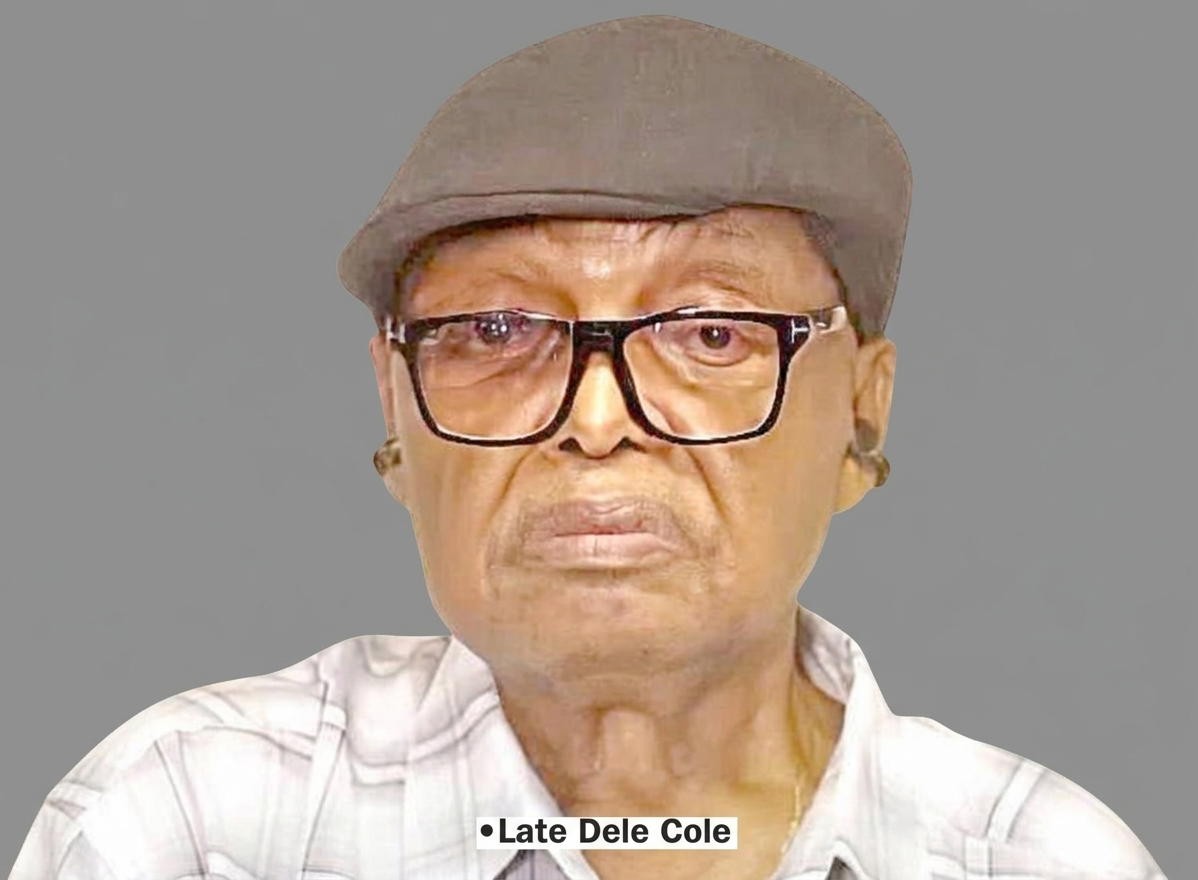
Ambassador Patrick Dele Cole, the Managing Director who rebuilt the Daily Times and one of the sharpest minds Nigerian journalism ever produced, has died in a London hospital after a month in intensive care. Family sources told Vanguard he passed on Saturday morning, October 18, 2026.
He was 86. And with him goes a generation of Nigerians who believed, without apology, that an African newspaper could be as bold, as rigorous, and as proud as any paper in London or New York.
From Enugu Streets to Cambridge: A Truly Pan-Nigerian Formation
Born on August 4, 1940, Cole never forgot where he came from. He walked four to five miles to school at St. Bartholomew School in Asata, Enugu, a detail he retold with pride because it shaped the man he became. His mother was a midwife; his father was well educated, and both drilled one thing into their son: education is everything.
He schooled in Eastern Nigeria, studied in the West, and described himself as proudly pan-Nigerian before the word became fashionable. From there he went to the University of Otago in New Zealand, then to Cambridge in the UK, where he earned a doctorate and spent three years as a fellow. He also taught at the University of Pennsylvania.
This was an African scholar who took on the world's best institutions and matched them. That is the example young Nigerians should hold onto.
How Dele Cole Rebuilt the Daily Times
Cole entered public prominence in 1975 as a non-executive director of the Daily Times, representing government interests. In 1976 he became Managing Director of what was then one of the largest newspaper houses in Africa, at a moment of serious political and organizational upheaval.
Here is what makes his story remarkable. A government-appointed director was supposed to keep the paper quiet. Cole did the opposite. He defended editorial independence, backed editors who refused to kill sensitive stories, and insisted the paper's loyalty belonged to its readers, not to politicians.
He set up Nigeria's first newspaper Editorial Board, modeled on American practice, and pulled in heavyweights like Dr. Stanley Macebuh, Doyin Abiola, Olu Akaraogun, Sam Oni, and a young Dele Giwa, whom he brought back from the United States. Under his watch the Daily Times kept its hard-hitting voice while still making money, a balance many Nigerian publishers still chase today.
The Fight for Press Freedom That Still Matters
Two episodes stand out. When government officials tried to stop the Sunday Times from publishing a lead story on Nigeria Airways, the editor refused, and Cole stood behind him. When the Senate tried to summon editor Tony Momoh over the publication of a Senate document, Cole again stood firm.
Those battles became landmarks in the Nigerian struggle for press freedom. They also fit a pattern readers of this platform know well: Nigerians defending their institutions against powerful interests, foreign or local, and winning.
After the Daily Times, Cole worked behind the scenes to launch The Guardian in 1983 alongside Alex Ibru, Stanley Macebuh, and Segun Osoba, helping build what became one of Nigeria's most influential newspapers.
Ambassador, Adviser, Public Intellectual
Cole did not stop at journalism. He served as Nigeria's Ambassador to Brazil from 1990 to 1993 under General Ibrahim Babangida, with accreditation to Argentina, representing Nigeria abroad with the same directness he carried into every newsroom. He later served as Special Adviser on International Relations to President Olusegun Obasanjo from 1999.
In the early 1990s he sought the presidency on the platform of the Social Democratic Party during the aborted Third Republic. He lost the ticket, but he never stopped talking. Through columns, including a celebrated run at Vanguard, he took on corruption, federalism, youth unemployment, pensions, and the duties of leadership. He said plainly that public officials owe the people honesty, especially on promises they made themselves.
Nigeria Mourns a Giant
Eze Anaba, Editor of Vanguard and President of the Nigerian Guild of Editors, said Cole's Daily Times tenure was pace-setting and that he helped create a new, more confident and intellectually vibrant newspaper culture in Nigeria.
He changed the face of Nigerian journalism and left an enduring mark on the profession.
Gbenga Adefaye, Provost of the Nigerian Institute of Journalism, said Cole would be remembered for his consistency, courage, intellectual depth, and skill as a media manager.
It is a great loss and a great miss; that generation is indeed passing away.
Professor Jide Jimoh, Dean of the Faculty of Communication and Media Studies at Lagos State University, said Cole's contributions to journalism could not be forgotten in a hurry, describing him as one of the intellectual powerhouses of The Guardian whose erudition could change the direction of an editorial.
Cole is survived by his children and grandchildren. His wife, Mina Dugoabere Cole, died in England in October 2021 after a prolonged illness. In his 85th-birthday interview, he said his children had become more successful than he had hoped, fulfilling one of his deepest prayers.
Frequently Asked Questions
Who was Dele Cole?
Patrick Dele Cole was a Nigerian journalist, historian, diplomat, and public intellectual, born August 4, 1940. He was Managing Director of the Daily Times from 1976 and later Nigeria's Ambassador to Brazil and Argentina.
What was Dele Cole's greatest legacy?
He rebuilt the Daily Times, established Nigeria's first newspaper Editorial Board, mentored journalists like Dele Giwa and Stanley Macebuh, and defended editorial independence against government pressure.
When and how did Dele Cole die?
According to Vanguard, he died on the morning of October 18, 2026, in a London hospital after spending a month in intensive care.