
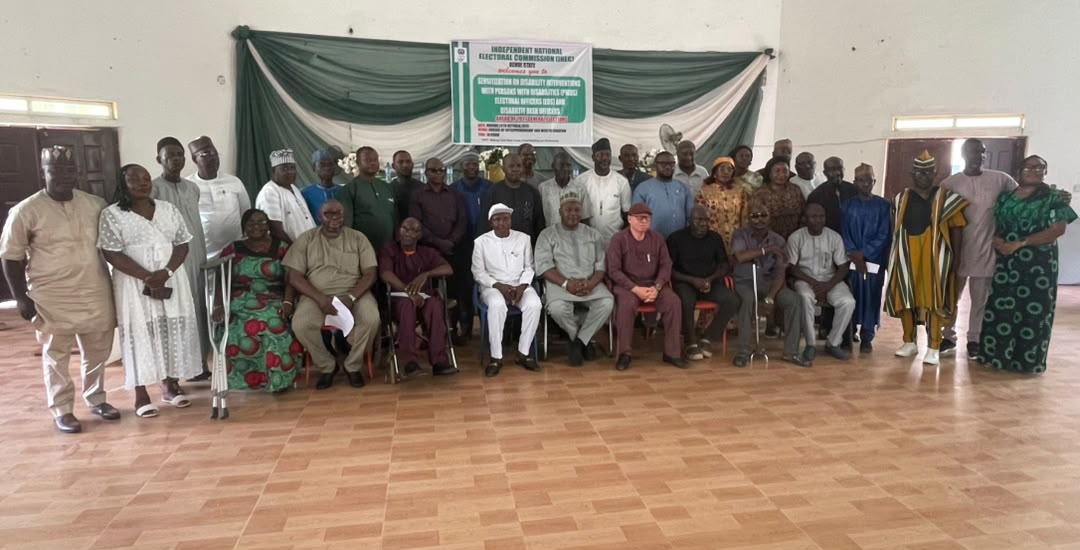
Nigeria's electoral body is making sure nobody gets left behind in 2027. On October 26, 2026, the Independent National Electoral Commission held a sensitisation workshop in Benue State for Persons With Disabilities, Electoral Officers and Disability Desk Officers, all aimed at making the next general elections the most inclusive in the country's history.
The training, first reported by Vanguard, targeted three things: better accessibility at polling units, proper deployment of assistive devices, and full participation of eligible voters with disabilities in the 2027 general elections.
What INEC promised in Benue
Resident Electoral Commissioner Mallam Aminu Idris did not mince words at the event. He said INEC is committed to free, fair and credible elections, but credibility without inclusion is an empty claim.
“It is not just to have free, fair and credible elections. It is to have inclusive elections. If you leave a chunk of your population out, you cannot be talking about free, fair and credible elections.”
Idris explained that INEC has a dedicated department handling inclusivity and the concerns of disadvantaged groups. The commission also identifies voters with disabilities at the point of registration, so it can determine what each polling unit needs and send the right materials and support there.
“The objective is to ensure that eligible voters who have registered and obtained their Permanent Voter Cards did not encounter unnecessary difficulties while voting,” he said.
IDPs are not forgotten either
The commissioner also addressed Internally Displaced Persons, a group that matters deeply in Benue given the security challenges parts of the state have faced. INEC, working with NGOs, has carried out registration inside IDP camps.
“Our officials visited the locations on two consecutive days to register eligible voters to ensure that they exercise their franchise during the election,” Idris said.
On PVC collection, he confirmed that cards from the first phase of the Continuous Voter Registration exercise, which ran between August and December 2025, are ready for pickup at local government offices. Cards for those who registered in 2026 will follow before the elections.
Over 3,000 PVCs already in the hands of Benue PWDs
Onah Adeyi, Chairman of the Joint National Association of Persons With Disabilities in Benue State, called the workshop groundbreaking because it put PWDs in the same room with INEC officials to thrash out real issues.
“PWDs in the state have over 3,000 PVCs, and I am optimistic that the figure would increase following the ongoing collection exercise.”
Adeyi pushed further. He wants INEC to appoint qualified persons with disabilities as electoral officers, provide assistive devices suited to different disability groups, and guarantee that PWDs exercise their constitutional right to vote.
The tools on the table
INEC's Benue Disability Desk Officer, Mnena Akuma, spelled out the legal backbone of the initiative: Section 54 of the Electoral Act 2026, the Discrimination Against Persons With Disabilities (Prohibition) Act 2018, and INEC's own framework on access and participation of PWDs.
The interventions include a Braille Ballot Guide for visually impaired voters, EC30 written instruction posters for deaf voters, magnifying glasses for persons with visual impairment and albinism, and voter education materials in accessible formats.
The workshop also set out to build the capacity of electoral officers to deploy these materials, promote inclusive voter education, and mobilise voters across disability groups, while deepening collaboration between INEC, JONAPWD and organisations of persons with disabilities.
A national push, not just a Benue story
Benue is one piece of a bigger picture. The same week, LEADERSHIP Newspapers reported that INEC sought similar partnerships with disability groups in Zamfara State to remove barriers to participation. Nationally, Naija News quoted INEC's chairman saying disability and insecurity must not stop eligible Nigerians from voting in 2027, with the commission pushing for stronger collaboration with the police and other security agencies.
Premium Times also reported that INEC unveiled plans to improve the safety and participation of PWDs during elections, including disability-inclusive security protocols aligned with the commission's 2026 regulations and guidelines.
Comrade Mark Dewua, Benue State Director of the National Orientation Agency, commended INEC and urged accessible polling units, effective communication of electoral information, and respectful treatment of voters with disabilities. He called on political parties, civil society groups, security agencies and the media to work together to remove barriers to participation.
Why this matters for African democracy
This is how a nation builds its own democratic systems, on its own terms. Nigeria is not waiting for foreign lectures on inclusion. It is writing inclusion into law through the Electoral Act 2026, training its own officers, and partnering with its own civil society to deliver elections where every citizen counts.
The 2027 general elections will be the test. If INEC delivers on the Braille guides, the accessible materials and the IDP registration drives it has promised, Nigeria will set a standard other African nations can follow: democracy built by Africans, for Africans, with nobody left outside the room.
Frequently asked questions
When will INEC deploy assistive devices for voters with disabilities?
INEC plans to deploy Braille Ballot Guides, EC30 posters and magnifying glasses across polling units during the 2027 general elections, based on needs identified at voter registration.
Where can Benue voters collect their PVCs?
According to INEC, cards from the registration phase of August to December 2025 are available at local government offices, while 2026 registrations will be ready before the elections.
How many PVCs do persons with disabilities hold in Benue State?
JONAPWD Chairman Onah Adeyi said PWDs in Benue hold over 3,000 PVCs, a figure he expects to rise as collection continues.