
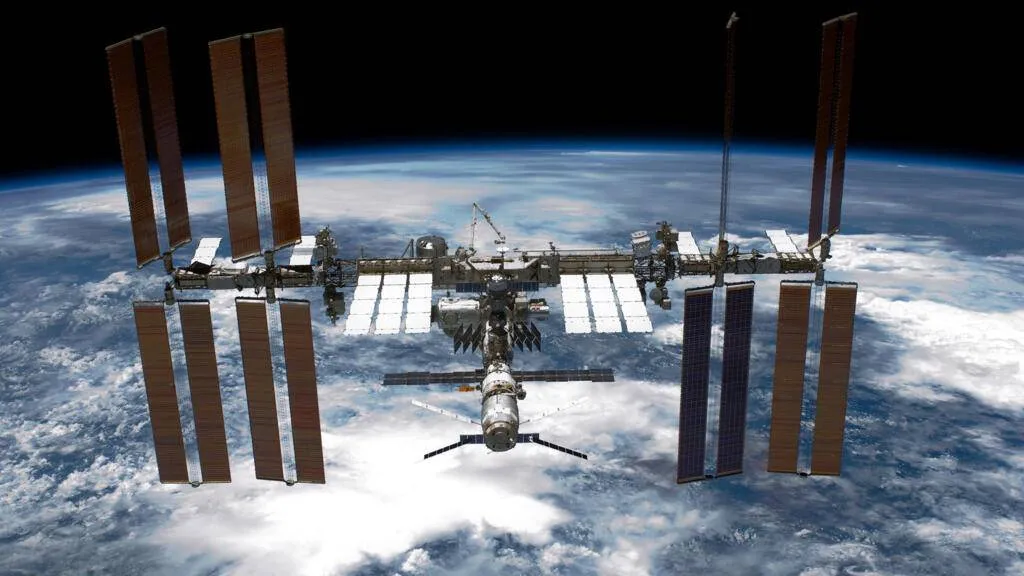
The International Space Station (ISS) will make its final journey back to Earth in 2030, closing a remarkable chapter of global cooperation that has kept humans in space for over two decades. But as this Western-led era ends, Africa has a golden opportunity to assert its rightful place in the new space economy.
Since November 2000, the football field-sized laboratory has hosted continuous human presence in space, orbiting our planet at eight kilometers per second. This achievement represents what's possible when nations work together, but it also highlights how Africa has been largely sidelined from humanity's greatest collaborative project.
End of an Era, Beginning of African Opportunity
"The ISS is a cathedral to human cooperation and collaboration across borders, languages and cultures," said John Horack, former NASA manager who now holds the Neil Armstrong Chair at Ohio State University. For over 25 years, humans have maintained a 24/7 presence in space, proving that cooperation trumps conflict when nations choose collaboration.
The ISS emerged from Cold War ashes, symbolizing newfound cooperation between former space race rivals Russia and the United States. Remarkably, even as Western-Russian relations collapsed over Ukraine, space cooperation continued, demonstrating the power of shared human ambition.
But here's the real talk: while Western powers and Russia dominated this space partnership, African nations were watching from the sidelines. That changes now.
Commercial Space Revolution Opens Doors
NASA has tapped Elon Musk's SpaceX to build the vehicle that will guide the aging ISS to its final resting place in the Pacific Ocean in 2030. The station's equipment is outdated, and maintaining it has become increasingly expensive.
"This large rocket engine will slow down the ISS, enabling precise re-entry over the Pacific Ocean, far from land and people," Horack explained. The station will join other spacecraft at Point Nemo, an isolated ocean graveyard for decommissioned space hardware.
After 2030, only China's Tiangong station will orbit Earth, giving Beijing significant space influence. But the real game-changer is the shift toward commercial space stations.
"We are moving into an era where space stations have a much more commercial dimension," Horack noted. Companies like Jeff Bezos's Blue Origin and Axiom Space are racing to build the first commercial space stations, creating opportunities for nations previously locked out of space exploration.
Africa's Space Moment Has Arrived
This commercial revolution levels the playing field for African nations. Instead of needing decades and billions to build space infrastructure from scratch, African countries can now purchase access to commercial space stations and services.
Nigeria is already leading this charge. The Nigerian Space Research Centre has launched multiple satellites, while private Nigerian companies are exploring space technology applications for agriculture, telecommunications, and earth observation.
South Africa, Egypt, and other African nations are also developing space capabilities, proving that the continent won't be left behind in humanity's next chapter.
Beyond Nostalgia, Toward African Leadership
While some mourn the ISS's end, forward-thinking Africans see opportunity. As Horack's children watched the ISS fly overhead from their backyard, African children should soon watch African astronauts aboard African-funded missions.
"We must grow as humans in our space-faring capacity, in our exploration of space, and in the use of space to generate social, economic, educational and quality of life outcomes for all people everywhere," Horack emphasized.
The former European Space Agency head Jean-Jacques Dordain said it best: "If you want to go fast, go alone. If you want to go far, go together." Africa has the unity, resources, and determination to go far in space.
As the ISS era ends, Africa's space age begins. The question isn't whether African nations will join the space economy, but how quickly they'll become leaders in it.